
 By
By Many years ago, I was out on a lake with my girlfriend in her parents’ motorboat. An Ontario Provincial Police patrol motored up and asked to see our required safety equipment, including PFDs, a heaving line, an anchor and a bailer. We had the first three items, but we didn’t have a bailer. Finally, my girlfriend found a coffee cup in the boat, which she proudly presented as “a bailer”. This was a real stretch, but the cops shrugged, told us to get a better bailer, and rumbled away in their patrol boat
Those aquatic cops had a point. If the hull had sprung a leak or been swamped by waves, then a bailer or a bilge pump would have been the only way to get the water out of the boat.
A bailer is an essential piece of safety equipment for canoeing as well. You absolutely need a way to empty out your boat when you’re far from shore or bobbing in an eddy at the side of a rapid.
A bailer is also a handy tool to carry water for drinking, cooking and extinguishing a campfire. And if you’re not too squeamish, then it can be used as a pee bottle in your tent when the bugs are thick or you don’t have time to go to shore.
Over the years I’ve developed some rather strong opinions on what I want from my bailer on my long canoe trips. Here’s how to build the exact model I use…
The Bailer Body

First, get your hands on a round bleach bottle. The 1.27 litre bottles are common but are too small – go for something in the 2 to 3.57 litre size size. Make sure the handle of the jug is large enough to fit four of your fingers through so you can use it with cold hands.
Then cut off the bottom of the bottle at an angle. This will create a flexible scoop that will mould to the curve of the hull when you’re trying to get out those last few puddles of water out of the bottom of your boat.
Carabiner

A bailer is a lightweight object that can easily get blown overboard by the wind. Therefore you want to attach it firmly to your boat.
Some people use a short length of rope or string to tie the handle of the bailer to a thwart, but I don’t like this; it creates too much of a tangling hazard, especially if your boat swamps and you go for a swim.
Therefore, I recommend using duct tape or Gorilla tape to affix a lightweight plastic carabiner to the handle. It doesn’t need to be a full-weight metal carabiner – you’re not going to be rappelling off a cliff with it.
With the carabiner in place, you can now easily clip the bailer to the straps of a pack, the cordage you use to tie your gear in, or any other attachment spot in the boat.
Floatation
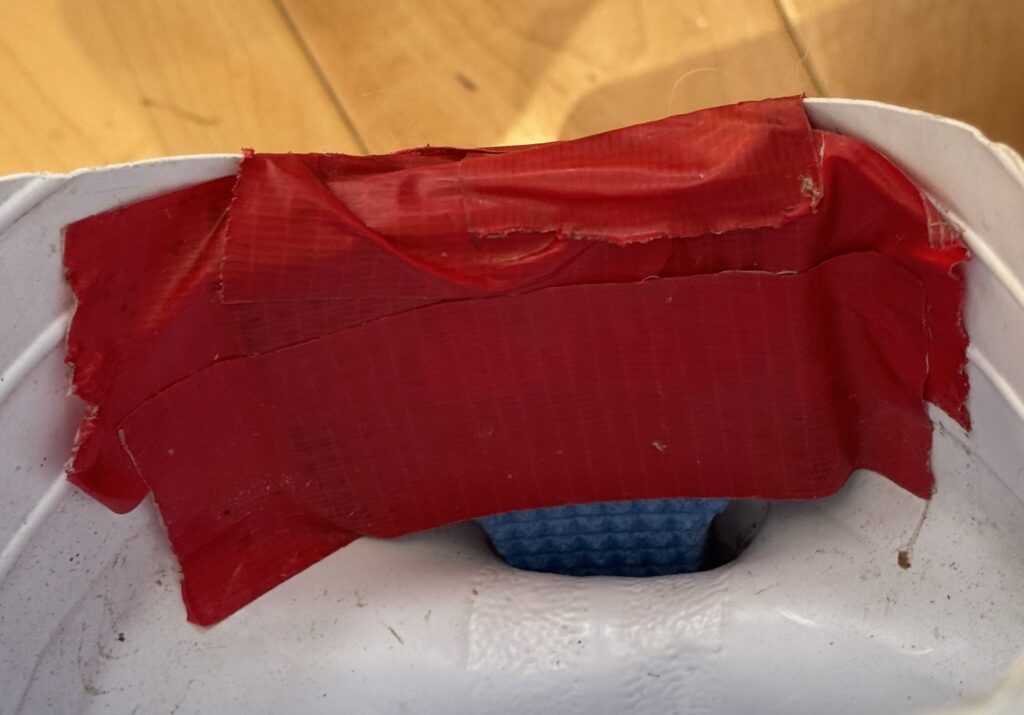
If your bailer should slip from your fingers, you don’t want it going to the bottom of the lake. Therefore, I like to build just enough floatation into the bailer to keep it above the water’s surface.
Typically, I’ll attach a small block of closed-cell foam (c. 1/2″ x 2″ x 4″) to the handle side of the bailer with heavy-duty tape. If I’m feeling really ambitious, I’ll cut the foam so a tongue of it extends into the bailer handle, just to create a little more room inside.
There you go – a little canoeing project for you that should take less than an hour from start to finish. But before you go let me tell you about one more thing…
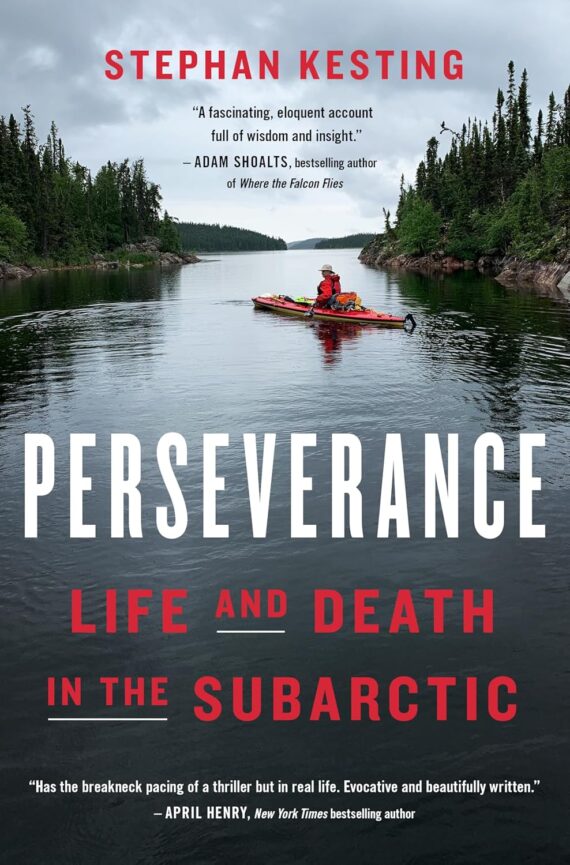
Perseverance, Life and Death in the Subarctic
In 2025, I published Perseverance, Life and Death in the Subarctic. This was an account of one of the most difficult and rewarding trips I’ve ever done; a 1,000-mile trip, completely alone, through some of the most isolated terrain in North America after a life-saving kidney transplant.
On that trip I encountered bears, raced against wildfires, survived epic rapids, traversed the Arctic tundra, and experienced complete isolation (I didn’t see anyone at all for the last 26 days of the trip).
The book covers all the details of the trip, as well as the lessons learned that apply to accomplishing any difficult task.
More information about the book is available on Amazon, Barnes and Noble, Indigo or your local bookstore!