 By
By Put three canoeists in a room to discuss footwear and you’ll get four different opinions. It’s a controversial topic, to be sure.
My own opinions have been shaped by mistakes made while canoeing, wading and portaging during decades of doing longer expeditions in the remote North in Alaska, the Yukon, NWT, Nunavut, and northern Saskatchewan, Manitoba, Ontario and Quebec.
On my first major solo expedition, I emerged from the bush after 4 weeks of near-total isolation with a vastly increased sense of what I was capable of. But in addition to increased self confidence, I also had swollen, painful feet with numb toes; weeks of my feet being wet and cold had resulted in them developing trench foot, the same condition that was common among soldiers standing in the trenches of World War 1.
Fortunately, my feet eventually healed and didn’t require surgery or amputation. Ever since then, however, I’ve been on a quest for better canoeing footwear to stop that from happening again!
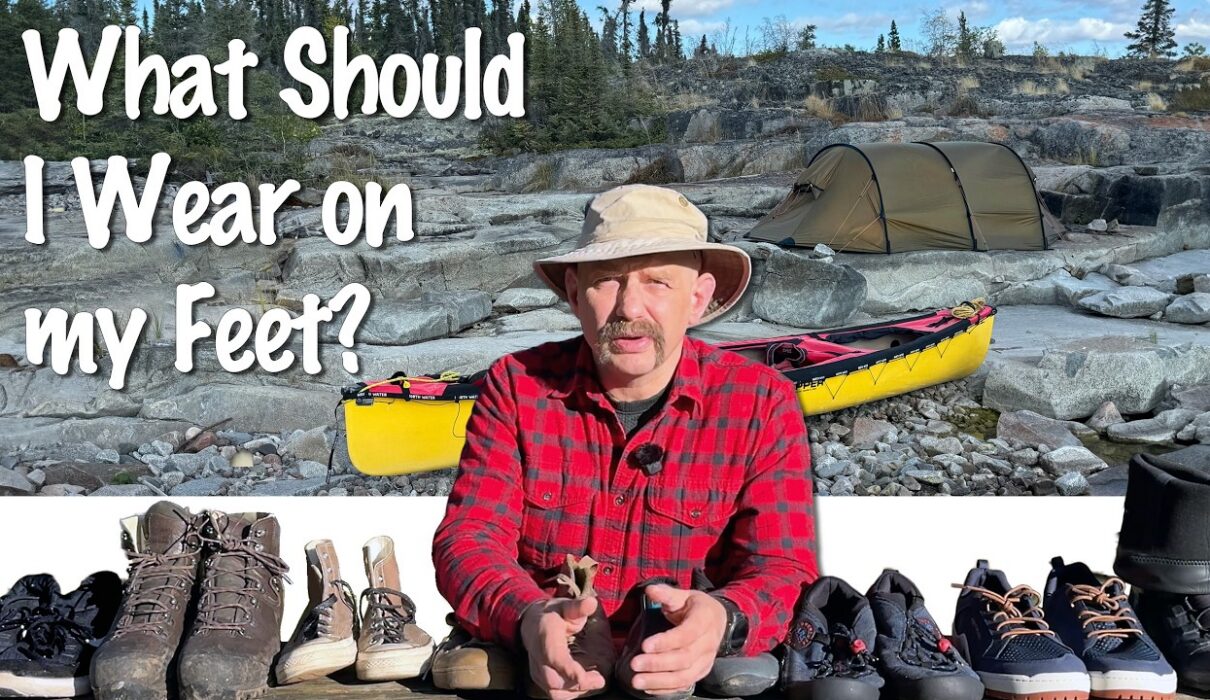
Here’s a detailed video I made about the evolution of my canoeing footwear, and what I’ve learned about footcare from many expeditions up North.
When it comes to boots and shoes for a canoe trip there are many different factors you need to balance, including…
- Waterproofness
- Warmth
- Speed of drying
- Speed of draining
- Ankle support
- Grip on slippery surfaces
- Mosquito resistance
- Weight and packing volume
The ideal mix of characteristics depends on the type of trip you’re doing. A half-day paddle between mangrove trees in a warm Costa Rican river estuary is very different from a multi-day trip on the Nahanni River in the Mackenzie Mountains of NWT.
Although I love a tropical vacation as much as anyone, I’m heavily biased towards canoe trips in the Far North, and so I tend to plan for windy conditions, cold weather and colder water. Below I’ll cover the stages of my canoeing shoe evolution in hopes that you’ll find the information useful
Please note that don’t have an affiliate program or any other financial motivation for promoting the shoes listed below. Rather than serving you with affiliate links, I’d much prefer if you would consider buying my book (Perseverance, Life and Death in the Subarctic) and leave a review of it on Amazon or GoodReads, please.
Running Shoes & Cotton Socks
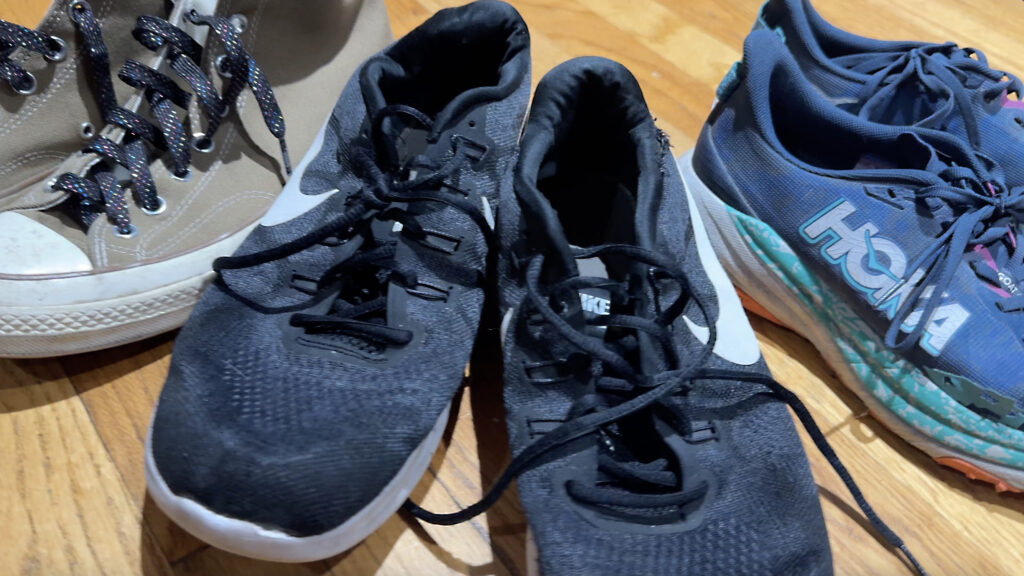
I started canoeing like everyone else, wearing whatever running shoes were lying around and a set of cotton socks.
The problem with this plan is that these shoes aren’t warm, aren’t waterproof, and take forever to dry. And cotton socks retain very little heat when wet and are also very difficult to dry out on a trip.
Therefore running shoes are OK for a quick paddle around a lake; if they get wet you can just go home and change into a dry pair. For colder weather or a longer multi-day trip, however, you can do better. Keep scrolling.
Hiking Boots
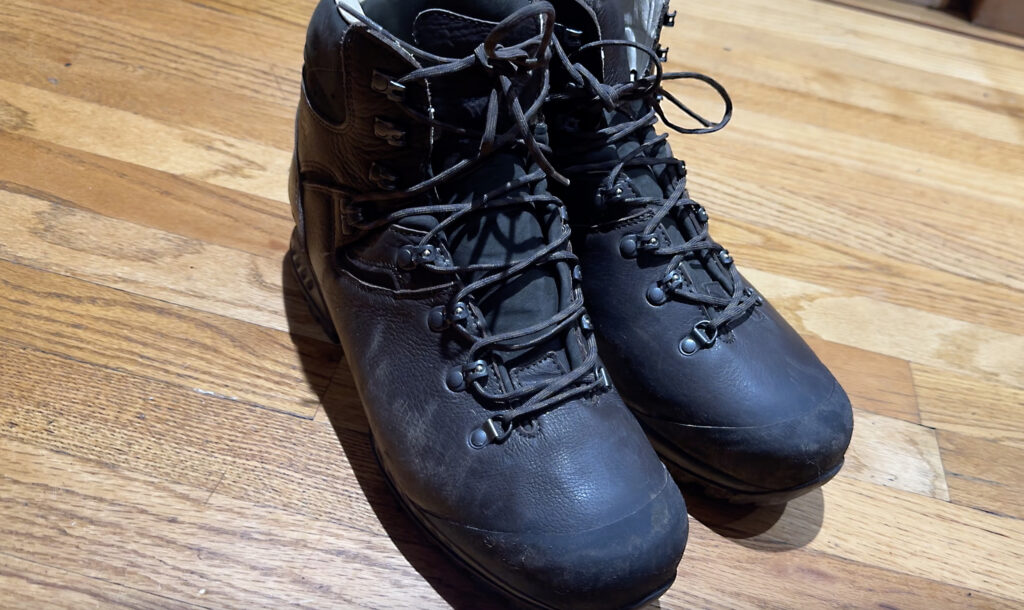
The default outdoor footwear for many people is a hiking boot, but the aren’t optimal for when you’re in a boat.
Hiking boots are bulky, heavy and usually not waterproof enough to keep your feet dry as you’re stepping in and out of your boat. Their materials and construction also means that they’ll take forever to dry if they get wet on a trip, assuming that the sun isn’t blotted out by dark clouds and sheets of rain at the time.
Worst of all, big boots like this present an entrapment hazard. Many people sit with one or both feet folded under their canoe seat, and if your boat flips, then your inflexible hiking boots could potentially get stuck under the seat and hold you underwater.
I’m not against bringing hiking boots on a trip if you’re going to be doing a lot of portaging or hiking and can handle the extra weight, just don’t wear them in the boat. Keep boots like this in a waterproof bag until you’re on shore and away from the water’s edge.
Rubber Boots
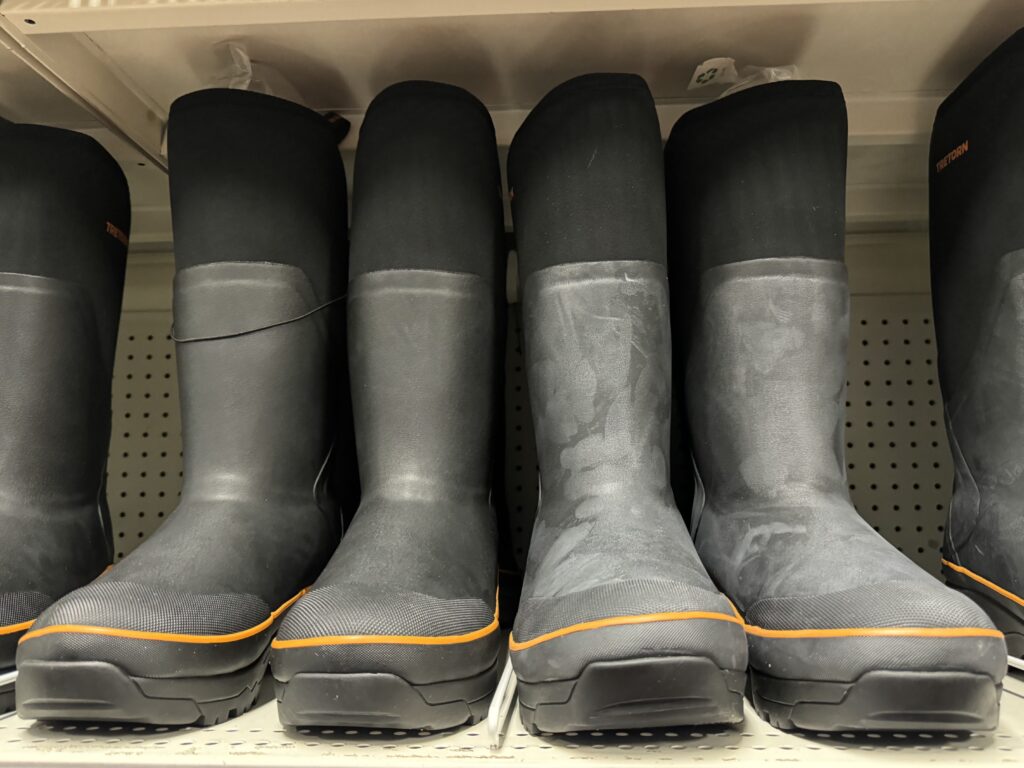
At some point in their canoeing career, almost everyone decides that rubber boots are the answer. Now you can stomp around in the water as you launch and land your canoe and keep your feet dry, right?
Well, the problem with boots 11 inches tall is that you will inevitably step into 12 inch deep water and – WOOSH – your boot will fill up with water.
Loose boots full of water make both walking and swimming difficult, and even if you get everything sorted out you’re still left dealing with wet feet and slow-to-dry boots. Walking in wet rubber boots is a recipe for blisters if you have to do longer portages, and a guarantee of frozen feet if the weather turns cold.
If you’re going to bring rubber boots, then also bring lots of wool socks so you can swap out your wet socks for dry socks when your feet get soaked. Or, better yet, bring neoprene or breathable waterproof socks (more on sock options later).
Quick-Draining Shoes and Boots
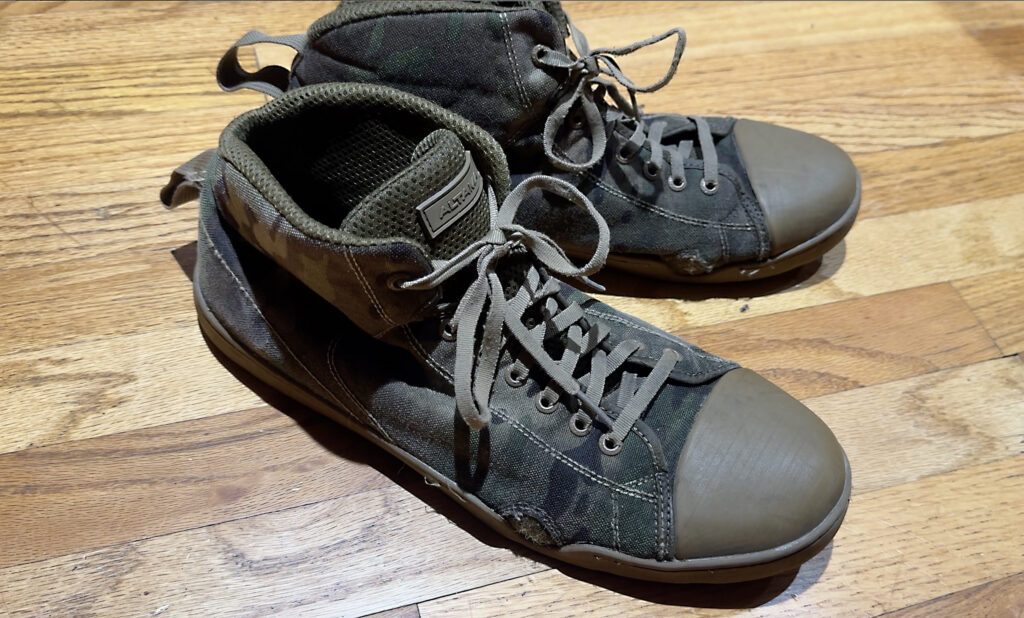
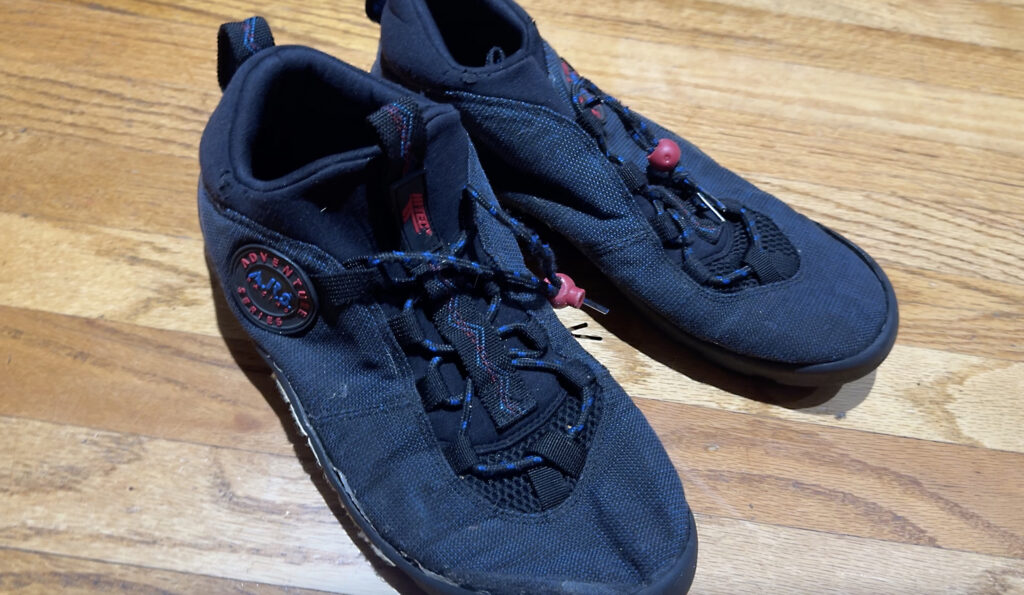
Given the problems with the previously mentioned options, many people conclude that the answer is some form of quick-drying shoes or boots, often called “water shoes”. Footwear like this is usually quick-draining as well, with water exiting the shoe through drainholes or the coarse mesh fabric itself.
Also, these shoes are typically made of synthetic materials with less absorbent padding, meaning they may not stay wet for weeks and might even dry out completely if you put them in the sun.
My first experimentation with this was wearing some old army surplus jungle boots. With footwear that belonged in the rice paddies of Vietnam, I paddled, portaged, poled, lined and tracked my way around Northern Ontario for 4 weeks.
The wool socks I wore under the jungle boots were NOT warm enough for daily immersion, and I still developed trench foot in both feet, as I mentioned earlier.
I usually still bring water shoes on my expeditions today (you can see them briefly during this slog of a portage) for hiking, portaging, and lounging around in camp on rest days, but I also bring neoprene or breathable waterproof socks as well to keep my feet warm inside those quick-draining shoes.
Neoprene Booties
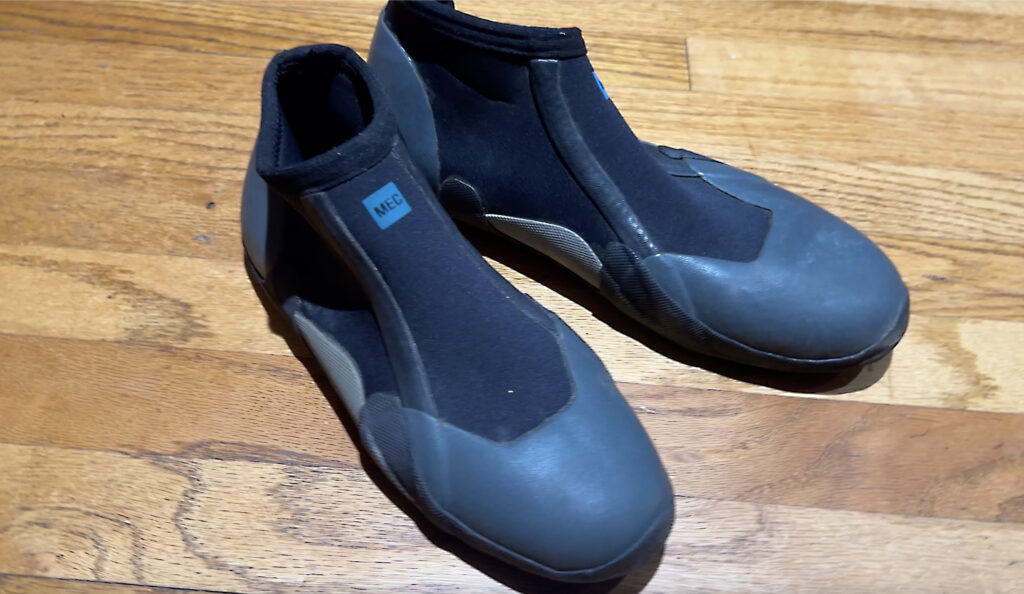
If you can’t have dry feet then you might as well have warm feet!
Neoprene booties function like wetsuits: the rubber has tiny bubbles embedded the material which provides some insulation, and the tight-fitting waterproof material slows the circulation of water against your skin. A little bit of water may get into the booties but it’ll quickly warm up against the skin, and now your feet will be mostly warm and wet.
In cold weather you can double up the insulation on your feet by wearing neoprene socks under the booties.
These booties typically don’t provide at ton of ankle support and don’t have a very thick sole to protect your feet from rocks, so if your trip involves a lot of portaging you may need to pack a second set of footwear.
Tall Neoprene Boots
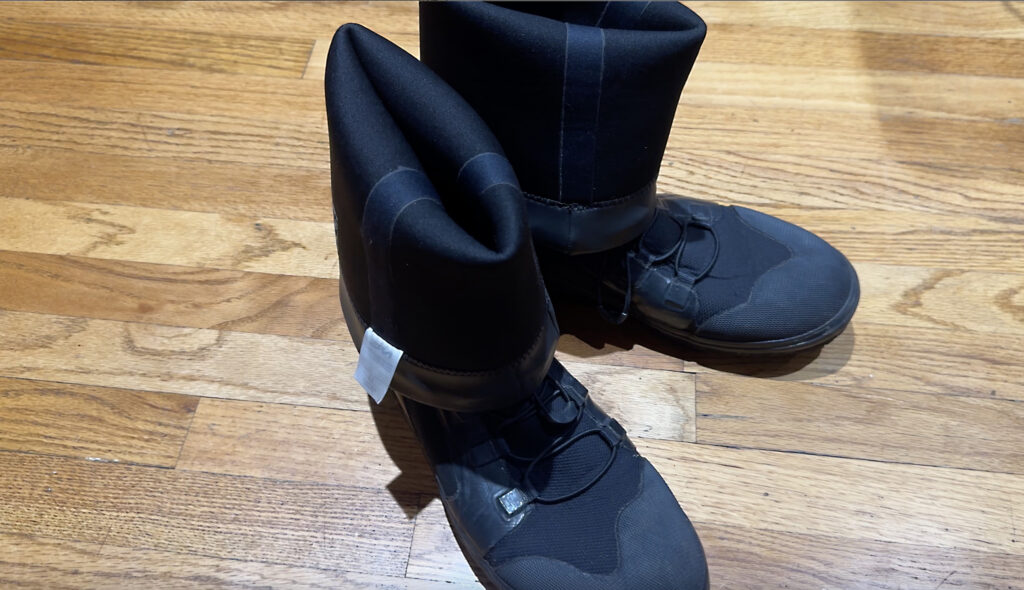
These neoprene boots are just more: thicker rubber so there is more insulation, and they extend further up your leg and thus also keep your calves warm.
And you can always increase the amount of insulation inside the boot so long as it’s not so tight that it cuts off your circulation; depending on the conditions I’ve worn i) neoprene socks, ii) wool socks, and iii) Gore-Tex socks over wool socks under these boots.
There isn’t a lot of ankle support in these boots the sole at the bottom
I wore NRS Boundary Boots on a long ascent of the Cochrane River in Northern Manitoba where I spent many hours wading upstream through tough whitewater, and they worked great; no trench foot and I kept all my toes!
My Current Expedition Footwear System
My current system for trips longer than a couple of days involves having two shoe choices and three sock choices. Everything is fairly lightweight so it won’t slow you down on the water or break your back on the portage trail.
Let’s start with the outer layer, the shoes themselves…
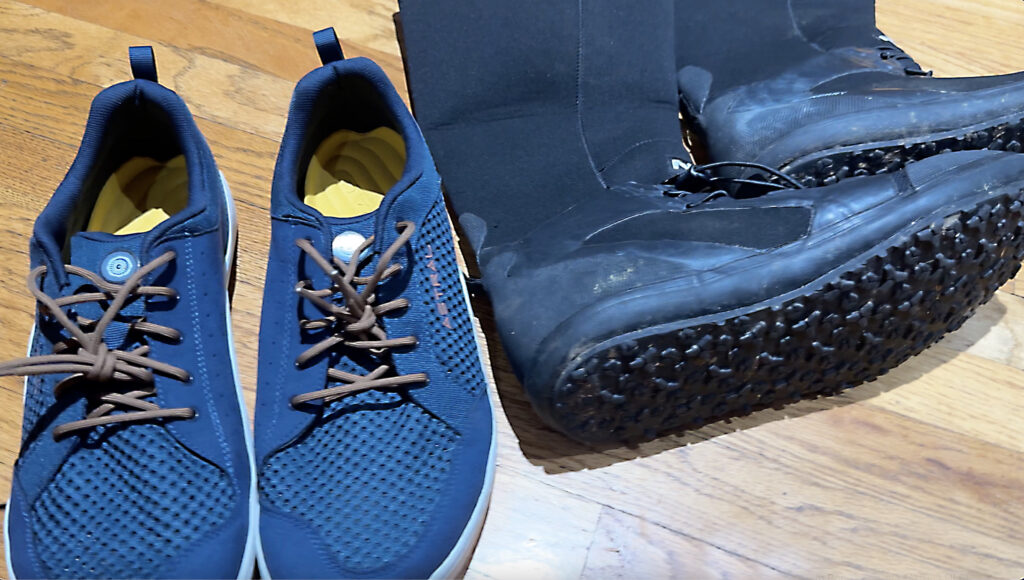
I’ve taken a two shoe combination very much like this on every major expedition for the last 7 years: at thick, tall neoprene rubber boot and a light, quick-draining shoe for portaging or bumming around camp at the end of the day.
The two actual shoes I’ll be taking on my next expedition to Nunavut will be the are NRS Boundary Boot (black neoprene rubber) and the Astral Techyak Trail Shoe (blue mesh). Again, I have no financial interest in either of these shoes or companies; it’s just what’s working for me now.
Under those shoes I’ll be using one of three different sock types…
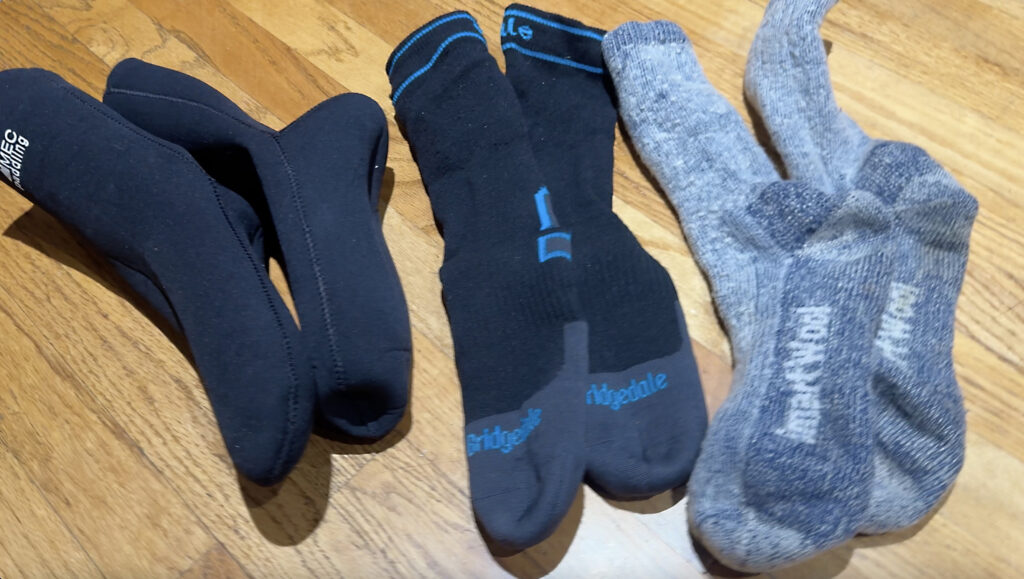
This next summer I’ll be heading north with one pair of neoprene wetsuit socks (Tide Socks from MEC), a pair of Merino wool-polyester socks covered in a flexible and waterproof polyurethane laminate.
This combination of socks should allow me to find the right balance of warmth and breathability to adjust for different circumstances. For example, if I think it’s going to be a dry foot day then I might wear the wool socks, but if I’m sure I’m going to be walking around in water frequently I might don the neoprene socks to keep my feet warm when wet.
Depending on the length of trip I might take 2 or 3 pairs of wool socks, and I try to keep one set with my sleeping bag to wear at night (warm feet at night is probably worth 5 extra degrees of insulation on your sleeping bag!
They say that intelligence is learning from your own mistakes, and wisdom is learning from other people’s mistakes. I hope this article made you a little wiser, at least when it came to protecting your feet on your next canoe trip!
Before you go, one more thing…
An Adventure Story
I wrote something that got published last year – it’s the true story of a 1,000 mile solo canoe trip through the northern boreal forest out onto the windswept tundra.
Along the way, there are forest fires, bear encounters, giant unmarked rapids, mistakes, triumphs, and the treacherous tidal flats of Hudson Bay. It’s also an exploration of the physical, mental and emotional components required to function in extreme environments.
Ladies and gentlemen, I give you, Perseverance, Life and Death in the Subarctic.
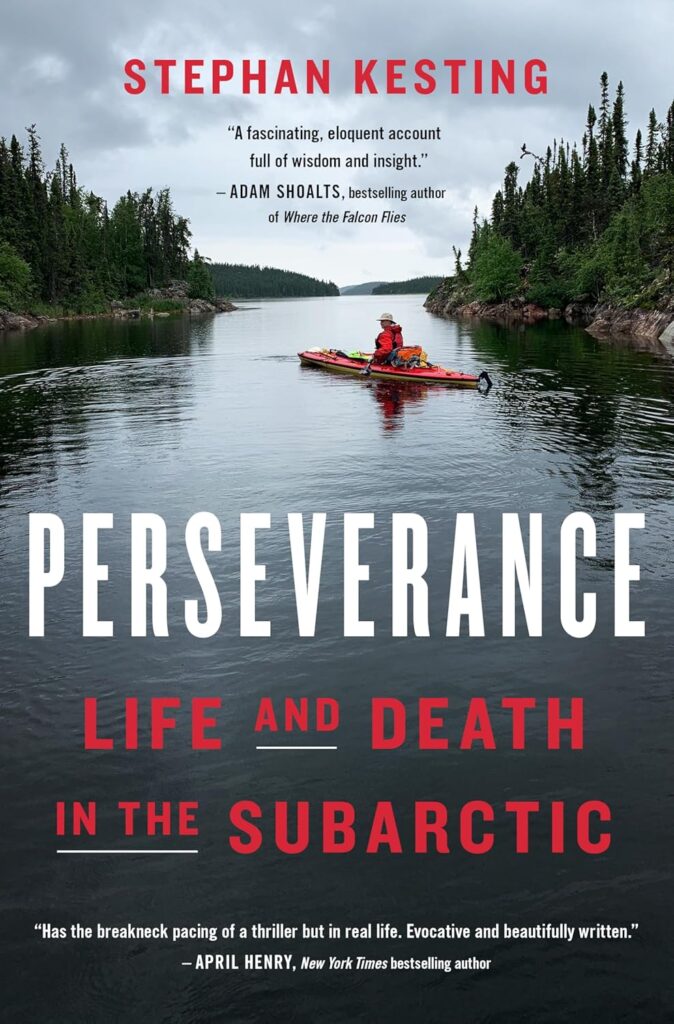
This book is available at all major bookstores and distributors ncluding Amazon.com, Amazon.ca, Barnes and Noble, and Indigo.
Grab it now at the links below.