 By
By A lot of people don’t understand that their sleeping mat is just as important as their sleeping bag when it comes to keeping warm on a camping trip.
I learned this the hard way during a 10 day spring trip into Quetico Provincial Park. For context, Quetico is in Northern Ontario, and we went in May when the weather can still get quite chilly.
This was the first trip I had ever organised myself, so I brought a good sleeping bag, but in my enthusiasm to have lighter loads across the portages I decided NOT to bring a sleeping mat; “Light and fast,” I thought.
Dumb idea: I froze at night!
A sleeping bag only keeps the top and sides of your body warm. That’s because the top and sides is where the insulation has a chance to spread out and trap dead air which is actually what keeps you warm. The problem is that the part of the sleeping bag under your body is be crushed flat, meaning that there is actually very little effective insulation between you and the cold, cold ground.
That’s where your sleeping mat comes in – it provides a barrier between you and the heat-sucking ground and keeps you warm at night.
Sleeping mats are typically assigned an R value, which is a measure of how the insulation in the mat resists the flow of heat out of your body and into the ground. The higher the R value number the more it’ll impede the loss of heat from your body into the ground and the warmer you’ll sleep.
- A lightweight sleeping mat designed for warm weather and summer use might have an R value of 1 or 2
- A medium-weight sleeping mat for the shoulder season when the nights might dip below freezing use might have an R value of 2.5 to 4.5
- A heavier sleeping mat for winter use and camping in the snow might have an R value of 5 or more.
R value is the most important factor when it comes to selecting a good sleeping mat, but other factors include…
- Weight
- Deflated size
- Comfort
- Ease of inflation
- Ease of repair
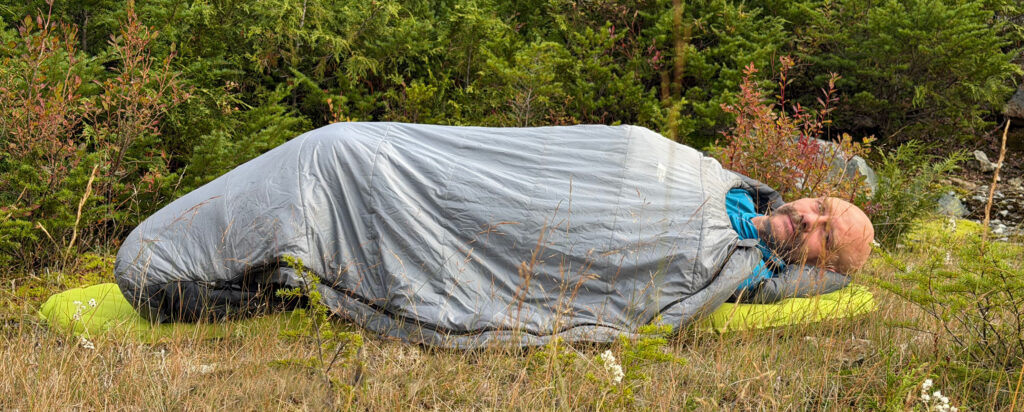
My Current Favorite Sleeping Mat
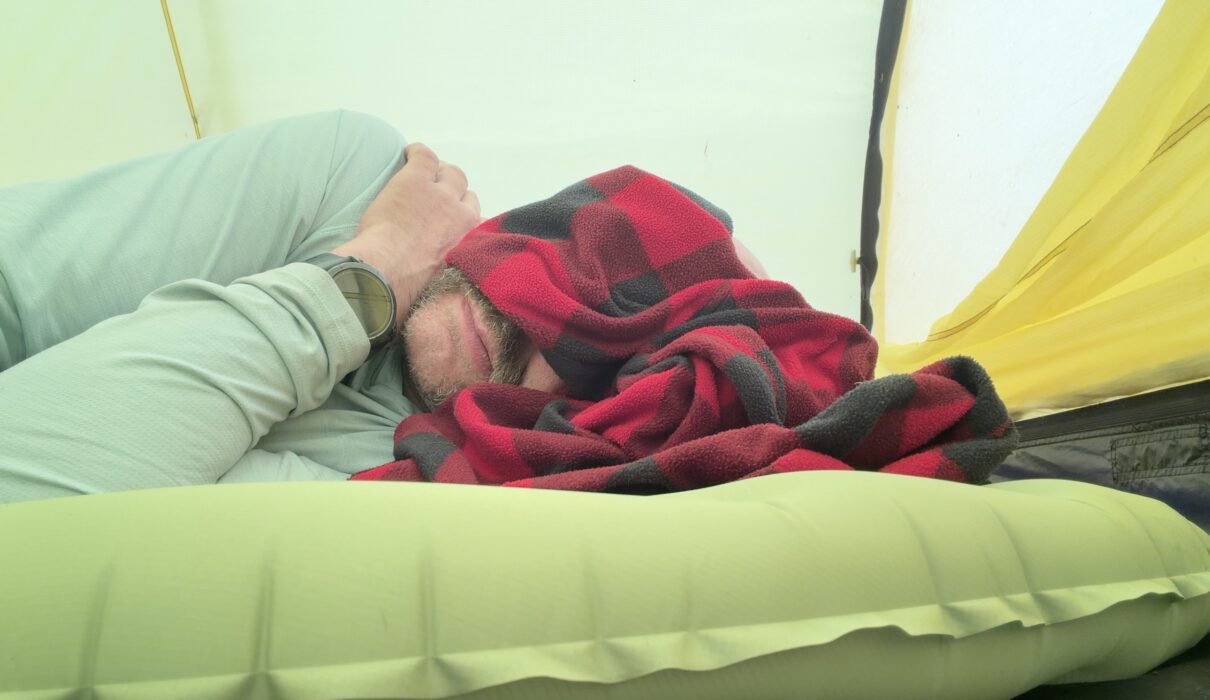
My current mat of choice is the Exped Ultra Mummy mat with the 3R (R value = 3) option. I’m tall so I got the longest, widest version (LW), but it also comes in different sizes and also in a slightly heavier 5R rating for winter travel.
I used this mattress on my 30 day solo expedition in the summer of 2026 crossing Nunavut on the Kazan, Kognak, and Tha-Anne Rivers. This was the first mattress in several such expeditions that didn’t develop a hole or need repair, which speaks to the durability of the outer construction despite the light weight. That being said, a friend of mine did accidentally drop the tip of a sharp knife through his and said that using the enclosed repair kit was quite easy and effective.
The insulation inside the mat is something called Texpedloft, a lightweight wooly material welded onto the inside of the mat at the top and bottom so that inflating the mat with the included ‘schmozzle’ filler bag spreads out the insulation, resulting in a warm mattress that then also packs down quite small.
My Exped mat weighs in at 555 grams or just over a pound which is quite reasonable for the warmth and comfort it provides; the mummy shape saves you some weight and packing space relative to the rectangular shaped mat.
The mat is constructed using a series of interconnected tubes that run the length of the mat from your head to your feet. It’s thick enough that you don’t feel small rocks and other irregularities beneath the tent, and I especially like a feature that Exped added where the outer tubes are slightly larger than the inner tubes, resulting in a subtle cradling effect that makes the mat more comfortable and decreases the chance that you roll off the edges of the mat in the middle of the night.